
introduction of business in a changing world

Business represents the first unique human activities that define the human service. This initiated trade in unique ways even in the simple ancient marketplaces. Business has a spectrum that today reaches the modern multinational corporations. Yet more in the complex aspects of life: what does business mean today in the face of even more culture and technologies?
Corporate responsibility has also gained attention. Today’s consumers, investors, and employees also want responsible and quality products. They look for ethical transparency, inclusive practices, sustainable solutions, and leadership with a social aim. Business now involves a multi-dimensional approach, incorporating ethical, social, and ecological considerations.
Business as Value Creation
At its most fundamental level, business involves the creation of some form of value. That value can be a physical product, a service, a solution, or an experience. Value can even be a combination of all of these. The value exchanged may be a product, a service, or even a combination of the two. The vehicles of exchange may differ, but the ‘value exchange’ concept of business remains unchanged.
In the 21st century, the business value proposition is being transformed. Businesses must look beyond financial gain, customer receipt, and accepted values of commerce. These additional non-financial values include ethically and socially responsible business operations and enduring value to the community and society. These businesses must focus on the socially responsible elements as a form of legitimising their business and a strategic means to gain a competitive gap. This alteration in perspective of business value is perhaps the most significant likely genetic hallmark of 21st-century business.
The Role of Adaptability
The adaptive capacity of a business is perhaps its most important competitive attribute in the 21st century. Ever-increasing globalisation, runaway technological change, and unpredictable politics all contribute to the phenomenon of instability. Therefore, the phenomenon of instability is the ‘norm’ of many complex business environments. Businesses that maintain rigid frameworks and business practices are likely to disappear.
Businesses must be able to ‘adapt’ to numerous ‘shocks,’ such as the rise of artificial intelligence, unexpected supply chain crises, and digital transformations. Adaptability is not a choice but a rigid strategic necessity.

1. The Foundations of Business
At its simplest, all businesses have value. The myriad of problems, needs, and benefits any enterprise solves has value. Traditionally, these simplest businesses, in the simplest forms, had three core characteristics:
- The simple production of useful products out of raw materials.
- The simple distribution of such products or provision of services.
- The simple sustainment and growth of the income.
As the modern business expands and straits speak to the social spectrum of the enterprise, its basics now also stretch to include, for example, sustainable innovation.
2. The Role of Technology in Business
You can’t talk about any modern business without talking about technology. Automation and AI, e-commerce and fintech—technology has changed the foundations of business operations. The most significant effects include the following:
- Global Reach: As it stands now, even the smallest of businesses can serve customers across continents.
- Efficiency: Automation lowers operational costs and minimises human errors.
- Data-driven Decisions: Firms tailor offerings thanks to analytics and a previously unimaginable understanding of consumer behaviour.
- New Industries: Entirely new sectors like app development, cloud computing, and streaming services have emerged.
Businesses can operate globally without losing localisation and must continuously remain agile in the face of such rapid technology-driven changes.
3. The Human Element in Business
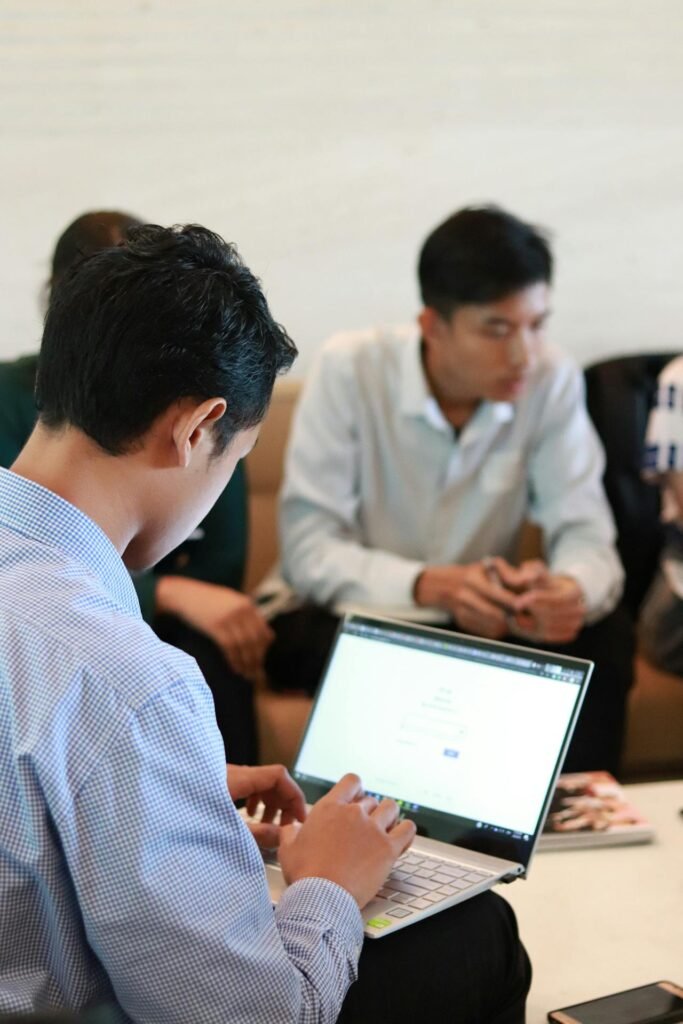
Efficiency can be driven by systems and machines, but the people are the heart of any business. Leadership, teamwork and, most importantly, creativity are solely human functions. Focusing on the human side of the business includes:
- Employee Well-being: Motivated employees are more productive.
- Customer Relationships: Trust and loyalty are essential for the long-term success of a business.
- Visionary Leadership: Great leaders encourage and facilitate organisational growth, particularly in challenging times.
A business that neglects its human side can get positive results in the short term, but for long-term success, it must be of utmost priority.
4. Sustainability and Ethical Practices
In earlier times, success was defined by profit alone. Presently, success is defined by the ability to make profit as well as the ability to do purpose-driven work. This is mostly the result of climate, resource, and social challenges. The need to do business ethically has resulted in the integration of ESG and CSR in business functions. Sustainability-focused organisations build trust and loyalty with their customers and investors as well.
5. Entrepreneurship and Innovation
Business has always been driven by entrepreneurship. Entrepreneurs are the market gap analysts and the solution creators. The digital age and venture capitalism allow more people to pursue business leadership. Anyone with the right mentality and a capable idea can make something impactful. This innovation leads to greater dynamics and competition in multiple industries.
6. The Challenges of Modern Business
- Regardless of the opportunities presented, modern businesses are faced with:
- Economic uncertainty brought on by inflation, trade disputes, and global crises.
- Increased competition brought on through globalisation.
Cyber threats as more business functions are done online.
The Future of Business
Business will continue to change in ways we can only guess. Some trends are:
- AI will be incorporated into numerous more sectors.
- Green economies will be focused more heavily on renewable energy and environmentally friendly practices.
- DeFi and blockchain technologies will continue to break into and innovate the traditional banking system.
Big data will provide the ability to automate the personalisation of products and services offered to consumers.
One thing will not change: businesses will survive that change and adapt to their environment while remaining true to their fundamental principle and core values.
Conclusion
Business is not only about making money. It is about creating value and progress in the world. There is imagination that business can be built on. It is built on the human spirit that will always advance. It is the 21st century, and a business should consist of divided ethics. Empathy should be paired with enforcement, technology with humanism, and efficiency with humanity.